

If you’ve ever searched “towing near me” after a breakdown or accident, you’ve probably noticed that not all towing services are the same. One of the most common points of confusion—especially for commercial drivers, contractors, RV owners, and fleet managers—is the difference between medium duty towing and heavy duty towing.
Choosing the wrong service can lead to delays, higher costs, equipment damage, or safety risks. Choosing the right one gets you back on the road faster and protects your investment.
In this in-depth guide, we’ll break down exactly what medium duty and heavy duty towing are, what vehicles fall into each category, when you need one versus the other, how pricing generally works, and why using the correct class of tow truck matters—especially on busy corridors like US-70, I-795, and highways throughout Wayne County, NC.
1. What Towing “Duty Classes” Really Mean
Towing duty classes aren’t marketing terms—they’re based on vehicle weight, axle configuration, braking systems, frame strength, and recovery complexity.
While definitions can vary slightly, the towing industry generally breaks vehicles into:
- Light Duty
- Medium Duty
- Heavy Duty
This article focuses on the middle and upper tiers, where most confusion happens.
2. What Is Medium Duty Towing?


Medium duty towing is designed for vehicles that are larger and heavier than passenger cars, but not as massive as tractor-trailers or heavy construction equipment.
Typical Weight Range
- 10,001 – 26,000 lbs GVWR
These vehicles often:
- Have dual rear wheels
- Use air-over-hydraulic or air brakes
- Are commercially registered
- Require stronger towing equipment than light-duty wreckers
3. Vehicles That Require Medium Duty Towing
If you operate or drive any of the following, you’re likely in medium duty territory:
- Box trucks (U-Haul size and larger)
- Delivery trucks (FedEx, Amazon DSP, UPS step vans)
- Utility trucks
- Service vans with heavy upfits
- Flatbed work trucks
- Dump trucks (single axle)
- Small buses and shuttle buses
- RVs and motorhomes (Class C and some Class A)
- Food trucks
- Landscaping and contractor trucks
If you’re unsure, vehicle GVWR (found on the door sticker) is the fastest way to determine classification.
4. Common Medium Duty Towing Scenarios
Medium duty towing is frequently used for:
- Breakdowns on highways or city streets
- Accident towing involving work trucks or vans
- Commercial vehicle relocations
- Fleet maintenance transport
- Parking enforcement or impounds
- RVs disabled on the roadside
In areas like Goldsboro and Wayne County, medium duty calls often happen on:
- US-70
- I-795
- NC-111
- NC-42
- Near Seymour Johnson AFB
5. Equipment Used in Medium Duty Towing
Medium duty tow trucks are built stronger than light-duty wreckers and may include:
- Medium duty rollbacks
- Wheel-lift wreckers with under-reach
- Reinforced frames and axles
- Higher-capacity winches
- Air brake connections
This equipment allows safe lifting and towing without stressing the disabled vehicle or the tow truck itself.
6. What Is Heavy Duty Towing?


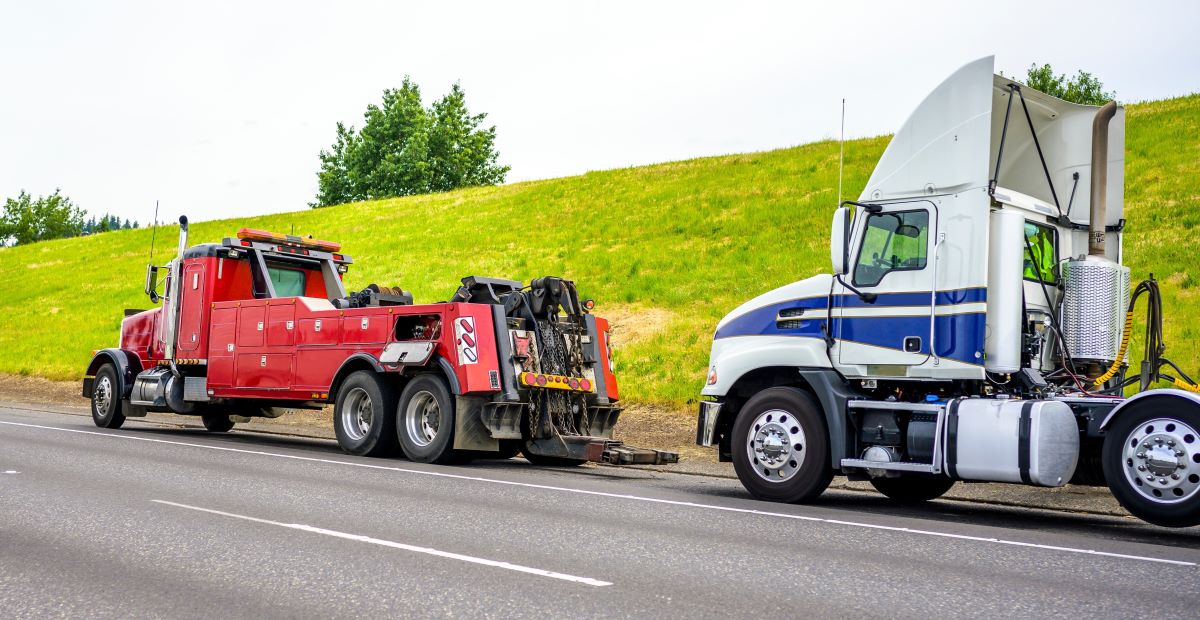
Heavy duty towing is required for the largest and most complex vehicles on the road—often involving advanced recovery techniques, traffic control, and multiple operators.
Typical Weight Range
- 26,001 lbs GVWR and above
These recoveries often involve:
- Air-ride suspensions
- Multiple axles
- Articulated frames
- Loaded trailers
- Hazardous or time-sensitive cargo
7. Vehicles That Require Heavy Duty Towing
Heavy duty towing is needed for:
- Semi-trucks (day cabs and sleepers)
- Tractor-trailers
- Dump trucks (tandem and tri-axle)
- Cement mixers
- Garbage trucks
- Lowboy and equipment trailers
- Fire trucks
- Large buses and motorcoaches
- Cranes and heavy construction equipment
8. Common Heavy Duty Towing & Recovery Scenarios
Heavy duty towing often involves more than just hooking up and pulling:
- Jackknifed tractor-trailers
- Overturned dump trucks
- Load shifts
- Ditch or embankment recoveries
- Bridge strikes
- Highway accident clean-ups
- Air brake failures
- Stuck vehicles in mud or soft ground
These calls frequently require lane closures, coordination with law enforcement, and advanced rigging.
9. Equipment Used in Heavy Duty Towing
Heavy duty recoveries use specialized equipment, including:
- Heavy duty wreckers
- Rotators (often 40–50 ton capacity)
- Multiple winches
- Airbag recovery systems
- Rigging chains, snatch blocks, and straps
- Landoll and lowboy trailers
This equipment allows controlled, upright recovery without causing secondary damage.
10. Medium Duty vs Heavy Duty: Side-by-Side Comparison
| Feature | Medium Duty | Heavy Duty |
|---|---|---|
| GVWR Range | 10,001–26,000 lbs | 26,001+ lbs |
| Typical Vehicles | Box trucks, RVs, buses | Semis, dump trucks, mixers |
| Equipment Size | Medium rollback/wrecker | Heavy wrecker/rotator |
| Complexity | Moderate | High |
| Recovery Time | Short to moderate | Moderate to extended |
| Crew Size | 1–2 operators | 2+ operators often required |
11. Why Using the Correct Tow Class Matters
Using the wrong towing class can lead to:
- Frame damage
- Suspension failure
- Brake system issues
- Insurance claim disputes
- Safety hazards
- DOT violations
A light-duty or under-rated truck attempting a heavy recovery is a recipe for disaster.
12. Pricing Differences: Medium vs Heavy Duty
While exact pricing varies, general factors include:
Medium Duty Pricing Influencers
- Distance towed
- Hook-up complexity
- Time of day
- Vehicle condition
- Winch-out needs
Heavy Duty Pricing Influencers
- Recovery complexity
- Number of trucks required
- Duration on scene
- Traffic control
- Load transfers
- Specialized equipment
Heavy duty recoveries are often billed hourly, while medium duty may be flat-rate or mileage-based.
13. Accident Recovery vs Breakdown Towing
Not all tows are equal.
- Breakdowns usually require less recovery work
- Accidents may involve disabled steering, locked wheels, or severe damage
Heavy duty accident recovery can resemble a construction project more than a simple tow.
14. Winch-Outs, Rollovers, and Load Shifts
Both medium and heavy duty services may include:
- Winch-outs from mud or ditches
- Rollover recovery
- Cargo or load stabilization
- Trailer uprighting
Heavy duty incidents almost always require advanced rigging.
15. Commercial, Fleet, and Business Towing Needs
Businesses rely on:
- Uptime
- Compliance
- Damage prevention
Medium and heavy duty towing providers often work with:
- Fleets
- Contractors
- Municipal vehicles
- Logistics companies
- Owner-operators
Having the right towing partner can reduce downtime and liability.
16. RVs, Motorhomes, and Specialty Vehicles
RVs fall into a gray area:
- Smaller Class C → medium duty
- Large Class A → heavy duty
Weight, length, and rear overhang all matter.
17. Highway Safety & Legal Considerations
Professional towing operators follow:
- DOT safety standards
- Proper lighting and cones
- Traffic control procedures
- Slow Down & Move Over laws
Heavy duty recoveries especially require experienced operators to keep roadways safe.
18. Choosing the Right Towing Company
When selecting a towing provider, ask:
- Do they have true medium and heavy duty equipment?
- Are operators trained and certified?
- Do they handle commercial and accident recovery?
- Are they familiar with local highways and regulations?
In Wayne County and surrounding areas, working with an experienced local provider like Big Will’s Towing & Recovery ensures the right equipment is dispatched the first time.
19. FAQs About Medium & Heavy Duty Towing
Q: Can a medium duty truck tow a semi?
A: No. Semis require heavy duty towing equipment.
Q: Is an RV always heavy duty?
A: Not always. It depends on weight and configuration.
Q: What if I’m not sure which service I need?
A: A professional dispatcher can determine the correct class based on your vehicle details.
20. Final Thoughts
Understanding the difference between medium duty and heavy duty towing can save you time, money, and stress—especially during emergencies.
If your vehicle weighs over 10,000 lbs, you’re already outside light-duty towing. From there, GVWR, axle count, and recovery complexity determine whether medium or heavy duty service is required.
When something goes wrong on the road—whether it’s a box truck breakdown or a tractor-trailer accident—calling the right towing class ensures the job is done safely, efficiently, and correctly.